Words by Flora Macdonald Johnston
In menswear, there is a particular kind of success story that prefers not to call attention to itself. No pyrotechnics, no inflated mythology, no talk of “disruption” for disruption’s sake. Just a steady accumulation of good decisions, bad decisions, reversals, recoveries and, if all goes well, a product people come back for again and again. LESTRANGE, the London label co-founded by Tom Horne and Will Green, now with polished stores in Soho and King’s Cross and a presence in Harvey Nichols, has ambitions that stretch well beyond it — and belongs to that quieter tradition.
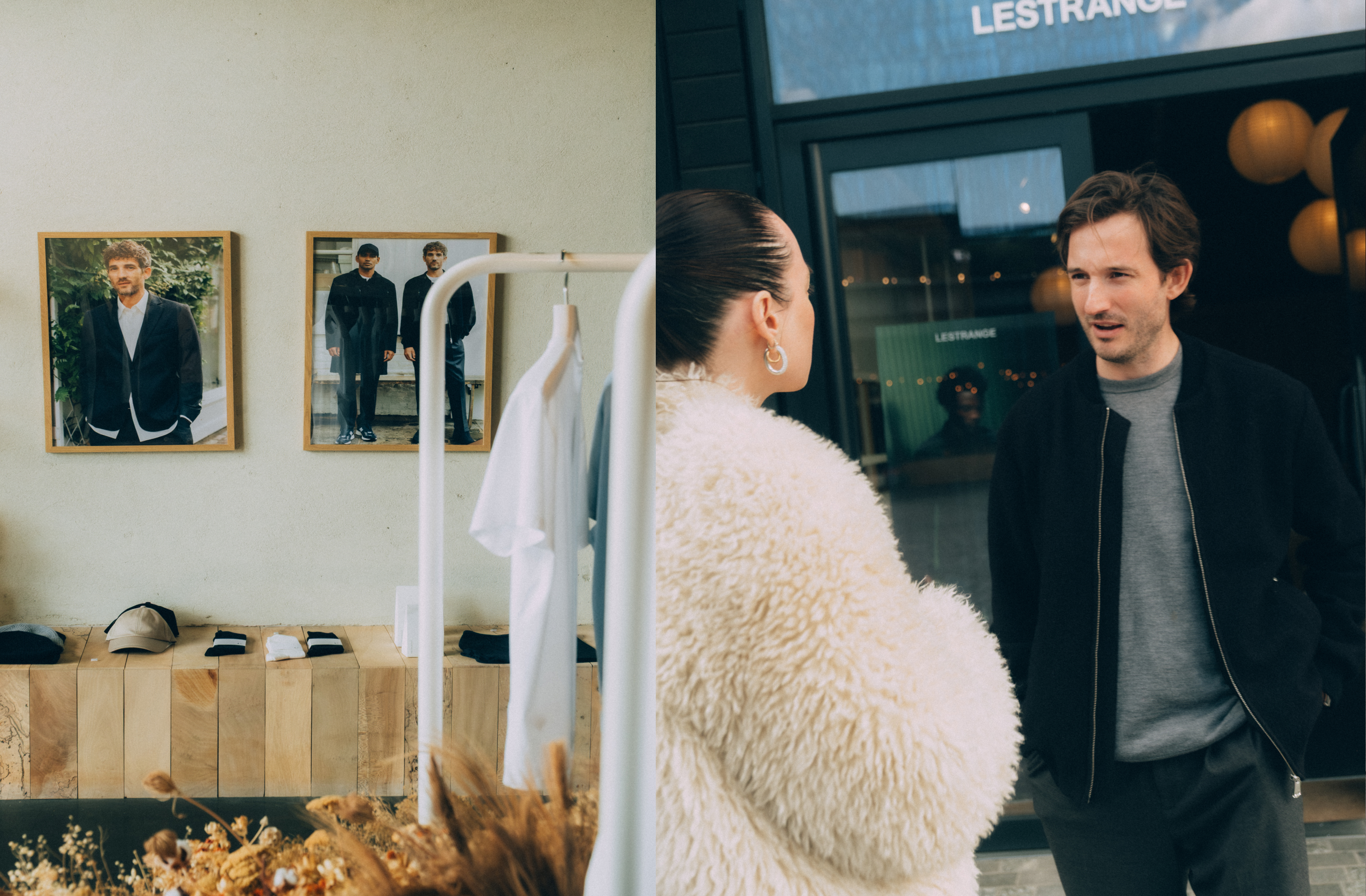
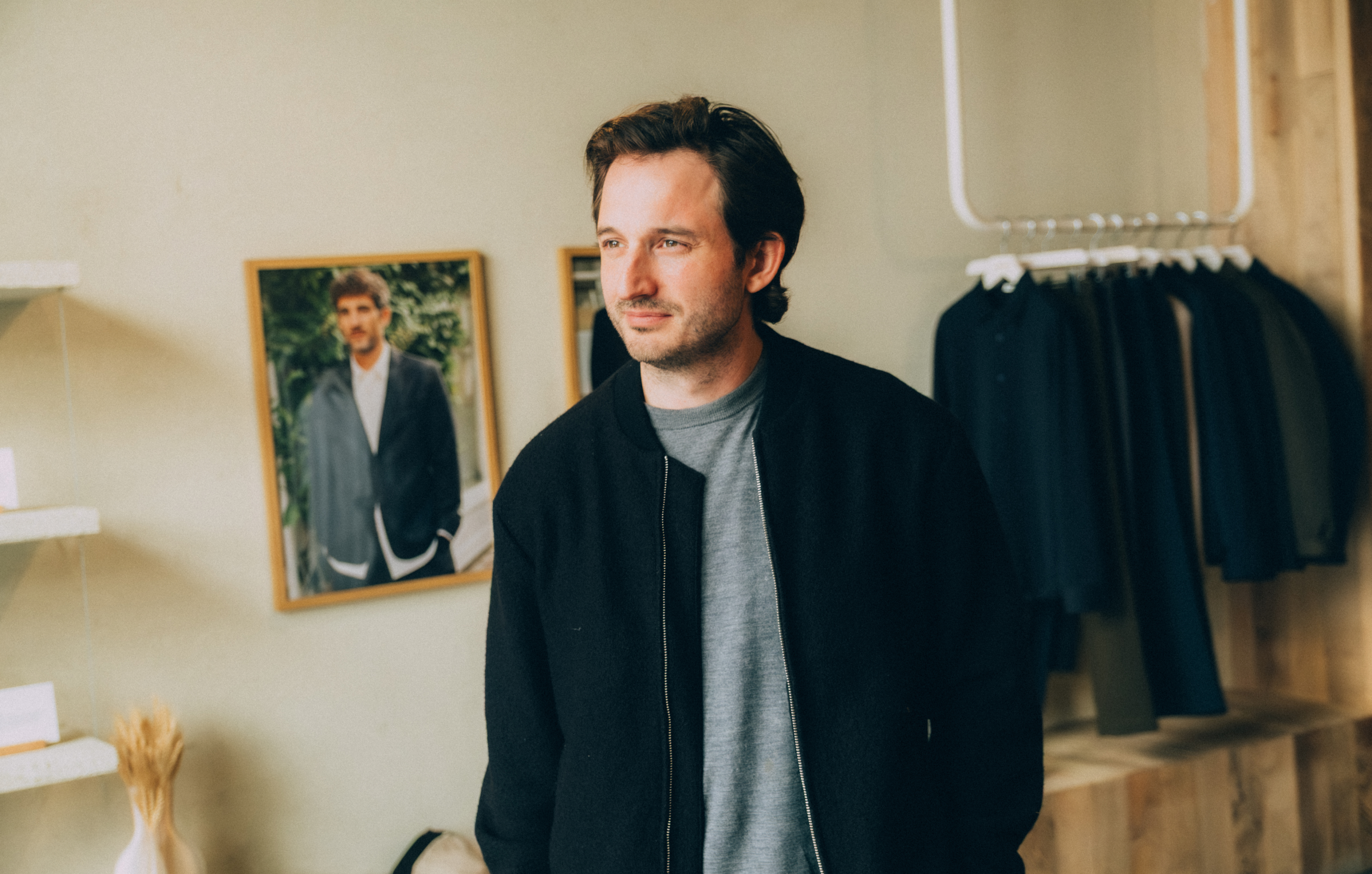
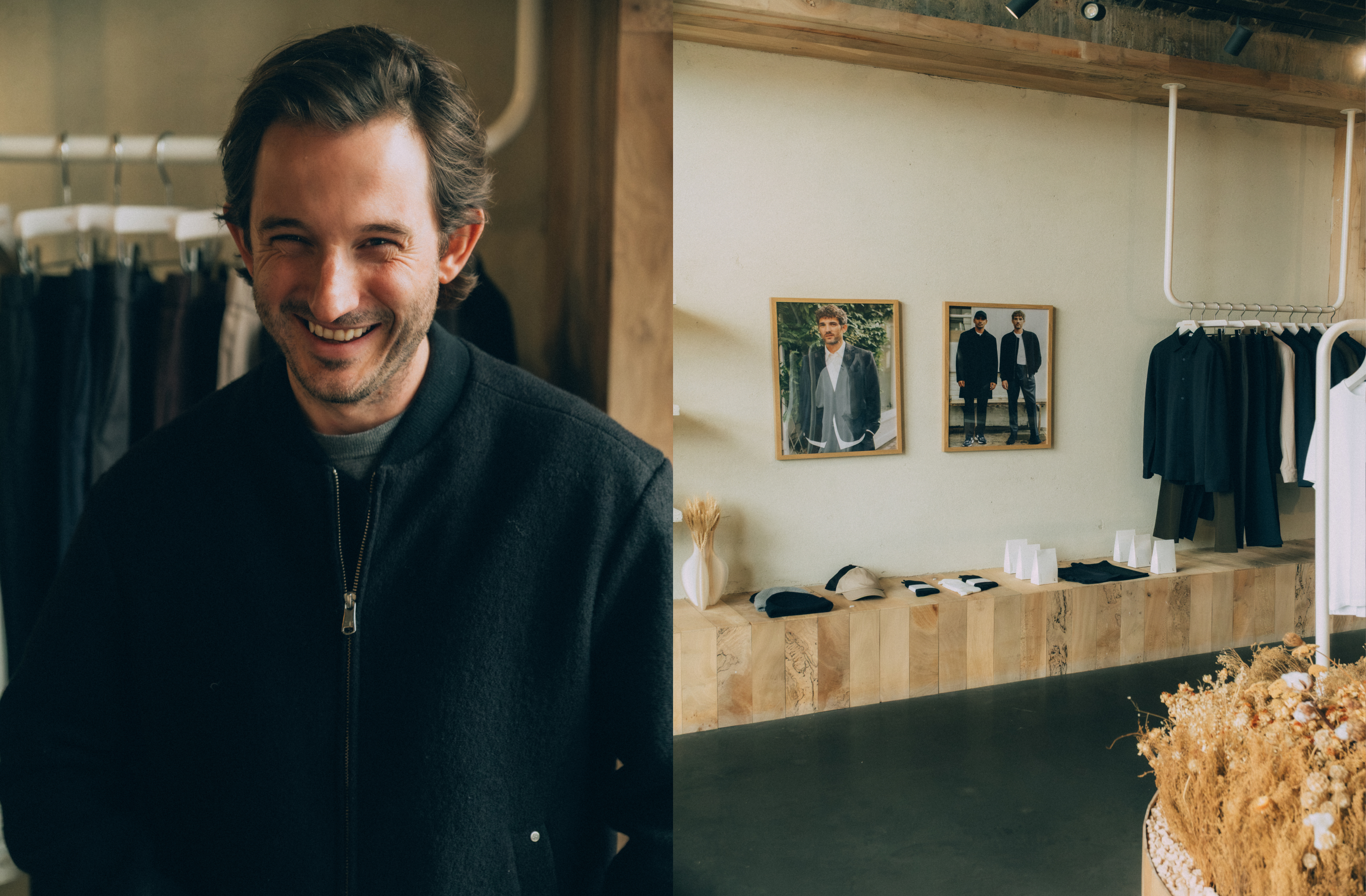
When I meet Tom (fresh off the plane from his very own stag do, which was impressive in and of itself), we are sitting inside one of the brand’s physical spaces: calm, considered, handsome in the way contemporary retail likes to be when it is trying very hard not to look as though it is trying. Which is fitting, because LESTRANGE itself was built on a similar proposition: clothes that work hard without shouting about it. Before fashion, though, Tom was in property — a switch that sounds more jarring on paper than it does in person.

“My brain has always liked lots of things going on at once,” he says. In his early career, he was working on the retail side of real estate, looking at developments, schemes and, crucially, the design of spaces. “The things that excited me most were interesting ideas and concepts, but also how spaces make people feel, how they’re designed architecturally.” Once you put it like that, the leap from property to clothing begins to look less like reinvention and more like a lateral move. Both industries, at their best, are about utility sharpened by beauty.
If fashion was not the obvious family trade, it was not entirely foreign either. His father was in property; his mother worked as a buyer for Harrods. “You are your parents,” he jokes, only half-joking. As a child, he had absorbed the grammar of quality almost by osmosis: knitwear, materials, factories, the difference between one fabric and another, why the right zip or cotton or mill mattered. It was a useful education, if not yet a business model.
LESTRANGE began, as many modern brands do, with an obsession. In this case: the perfect hoodie. Not a logo hoodie, not a status hoodie, but something pared-back and exacting enough to wear to dinner as easily as in the daytime. Tom talks about being inspired by brands and designers who had built a reputation on doing one thing exceptionally well — Margaret Howell, Japanese denim labels, Common Projects, even the old Apple logic of designing “masterpieces” rather than endless variants. The ambition was not to make more. It was to make better.
That early focus won attention quickly. LESTRANGE was picked up by serious retailers, among them Saks 5th Avenue, Liberty and Colette, and for a young founder, there was, naturally, a thrill to seeing your product in the world’s best stores. But it also exposed the less romantic part of the business. “We were not thinking about VC money or scale, scale, scale,” Tom says. “We were thinking: how do we make something amazing?” That meant sourcing premium components — the best Italian zips, luxurious finishes, all the expensive decisions a first-time founder makes when he is chasing excellence rather than margin.

The result was beautiful and commercially unsound.
The numbers, he says now with the benefit of hindsight, were absurd. Trade costs were too high, margins were too thin and the economics did not work, not really, not at scale, and certainly not in wholesale. It is the kind of lesson many young designers learn after the adrenaline wears off: being stocked is not the same as being sustainable. A brand can be coveted and still be badly built.
What followed was not a collapse so much as a strategic retreat — though “retreat” makes it sound defeatist, which Tom is not. LESTRANGE stepped back from wholesale and rebuilt itself as a direct-to-consumer business. “We thought, if we’re going to do this properly, we need to think carefully about the business model,” he says. It meant rethinking everything: stock levels, quantities, margins, cadence. In other words, all the things fashion people tend to find less seductive than a campaign shoot.
Still, he is careful not to overcorrect into founderly piety. Naivety, he argues, has its uses. “If you focus too hard on margins and all that stuff too early, the danger is that you never produce anything.” That early lack of business orthodoxy helped the brand discover its DNA. The trick was knowing when romance had to give way to structure.
The new structure was simple. LESTRANGE relaunched around a tightly edited core offer: seven pieces, positioned as “all you need”. It was, from a fashion point of view, a capsule wardrobe; from an investor’s point of view, a beautifully comprehensible proposition. At the heart of it was the 24 Trouser, a hybrid of tailoring and comfort that would go on to become the brand’s defining product. To date, Tom says, LESTRANGE has sold more than 100,000 pairs.
This, unsurprisingly, is where the business starts to look clever rather than merely idealistic. Tom’s view of menswear is disarmingly practical. Men, he says, are repeat buyers to a fault. Once they find something they like, they do not want novelty for novelty’s sake; they want the thing again, perhaps fractionally wider or narrower depending on the mood of the times, but essentially the same. “Menswear is the least complex,” he says. “You can’t just churn out clothes because they won’t accept it.” Fashion, by contrast, has often been built on planned obsolescence: cruise, pre-fall, drops, markdowns, mounting complexity, shrinking margin. Tom’s instinct was to reject that treadmill.
Investors, interestingly, seemed to understand this intuitively. LESTRANGE’s cap table is the sort of gloriously unorthodox mix that sounds implausible until you hear him explain it: a Margaret Howell managing director as an early backer; Ben Lovett of Mumford and Sons; F1 World Champion Jenson Button; Premier League footballers; Michelin-starred restaurateurs; hedge fund managers; vintage car dealers. “You never quite know who’s going to be on the end of the phone,” he says. Yet the common thread is clear. They are men who care about style, but not in a peacocking way. They want quality, ease, understatement. They do not want branding to enter the room before they do.
Physical retail came next, though not in one grand leap. First came pop-ups (around five of them), moving from site to site with a compact product range that made permanence impractical but made temporary activations feel sharp and nimble. Then, as the business grew, so did the case for stores. The jump was accelerated by the success of the 24 Trouser and, later, by the peculiar conditions of COVID.
Counterintuitively, the pandemic turned out to be good for LESTRANGE’s online business. While other brands tried to work out whether anyone would ever wear proper trousers again, LESTRANGE positioned its offer as a smarter form of comfort: the working-from-home trouser, presentable but forgiving. It caught the mood perfectly. Yet Tom never bought the idea that digital would replace physical retail altogether. If anything, the opposite happened. During and after lockdown, he doubled down on stores, taking advantage of temporarily low rents and betting that people would eventually crave real places again.

He was right.
“I always liked to go against the tide,” he says. In a world flooded with digital imagery, social content and now AI-generated campaigns, physical retail has become not less important but more so: a place to connect, test, reassure and make a brand feel real. That does not mean he is anti-technology. On the contrary, Tom is strikingly unsentimental about AI. He sees both the threat and the opportunity. The quality of the imagery already shocks him; the economics are obvious. What once cost six figures can now be achieved for a fraction of that. His view is that brands can either pretend this shift is not happening or learn how to place it within the ecosystem of the business. The point is not to replace creativity, but to expand the tools available to it.
Even so, he suspects the glut of synthetic content will push consumers back towards what cannot be faked: physical spaces, real communities, tangible products. In that sense, the store becomes not just a shop but a corrective.
Asked what he would say to a young founder starting out now, Tom does not reach for the usual startup catechism of disruption, scale and blind belief. If anything, he sounds wary of all that. Back yourself, yes. Learn your numbers. Expect things to go wrong. Then keep going anyway. Fashion, he suggests, is not really a business for the impatient or the deluded, though it is full of both.
Which is perhaps what makes LESTRANGE interesting. It was not built on fantasy, at least not the usual kind. No grand reinvention of the male wardrobe, no manufactured scarcity, no thudding luxury codes. Just the less glamorous challenge of making clothes men will actually wear, and then building a business robust enough to survive them wearing them for years. In fashion, that almost counts as a radical idea.